Live format
Full-day Zoom masterclass with guided explanations and practical examples.
LIVE FOOD COSTING MASTERCLASS WITH NINA BACANI
Hindi sapat na mabenta ang product mo.
Kailangan alam mo rin kung kasama sa presyo ang ingredients, packaging, labor, utilities, overhead, at iba pang applicable costs—para hindi ka busy sa orders pero abonado pala.
Sa Food Costing Masterclass — October 24, 2026, gagabayan kang gamitin ang practical worksheets at calculator sa sarili mong food product.
Register first. No payment is collected on this form. Your seat is confirmed after payment and proof verification.
Food Costing Calculator, practical worksheets, and lifetime replay included.
Markup % = (Selling Price − Cost) ÷ Cost × 100
Gross Margin % = (Selling Price − Cost) ÷ Selling Price × 100
Sample computation for illustration only. Your result will depend on your recipe, costs, yield, market, and pricing decision.BATCH 10 AT A GLANCE
Full-day Zoom masterclass with guided explanations and practical examples.
Saturday, October 24, 2026 · 9:00 AM–4:00 PM Philippine Time
₱1,497 one-time payment
Friday, October 23, 2026 at 11:59 PM Philippine Time
Live masterclass, calculator, worksheets, templates, and lifetime replay via the private Facebook group.
your saved payment method payment details appear after registration.
PUBLISHED BATCH 10 PRICING
All changes follow Philippine Time. The active rate is confirmed on the server when you register.
CHECK YOUR CURRENT PRICING PROCESS
Hindi mo kailangang hintayin na maubos ang puhunan bago mo tingnan ulit ang numbers.
Kapag isa o higit pa rito ang nangyayari sa business mo, hindi more orders ang unang kailangan mo. Mas malinaw na costing muna.
MABENTA DOES NOT ALWAYS MEAN PROFITABLE
Minsan sunod-sunod ang orders. Pero pagkatapos bumili ulit ng ingredients, packaging, at supplies, parang hindi mo pa rin makita kung magkano talaga ang natira.
Hindi lang main ingredients ang may cost. Kasama rin ang oil, condiments, seasonings, toppings, at ibang maliliit na items na nauubos across many orders.
Boxes, tubs, labels, utensils, platform fees, commissions, and delivery subsidies can affect what remains from every sale.
May value ang preparation, cooking, baking, portioning, packing, and cleanup—even when ikaw mismo ang gumagawa.
Gas, electricity, water, cleaning supplies, rent, equipment use, and other operating expenses still need a reasonable basis in your pricing process.
Kung mali ang estimate ng servings or may spoilage and wastage, puwedeng iba ang actual cost per unit kaysa sa iniisip mo.
Kapag kulang ang costing, kahit mabenta ang product, hindi pa rin malinaw kung profitable ang bawat order. The goal is not more orders first. The goal is clearer costing before your next batch.
A REPEATABLE PROCESS FOR YOUR FOOD BUSINESS
Hindi ito tungkol sa pag-copy ng isang “magic price.” Ang kailangan mo ay isang process na puwede mong ulitin kapag may bago kang product, tumaas ang costs, o may promo kang gustong i-review.
I-identify ang ingredients, packaging, production labor, utilities, overhead, wastage, and other applicable costs.
Alamin kung ilang servings, trays, tubs, cakes, bottles, packs, or products ang lumalabas sa isang batch.
I-compute ang estimated cost ng bawat serving or product—not the price of the whole ingredient package.
Review a selling-price basis using your cost, markup, market, quality, serving, and business target.
Alamin kung ilang orders ang kailangan to cover costs and review whether a discount, bundle, freebie, or bulk offer still makes sense.
BRING ONE PRODUCT
Before the class, prepare one actual product or product idea. Bring whatever information you already have:
Your result depends on the completeness and accuracy of the information you bring. The class gives you the process and tools; it does not promise a specific selling price, sales level, or income result.
VERIFIED SAMPLE COMPUTATION
The sample below reconciles automatically. It demonstrates the definitions used on this page and helps prevent markup from being mislabeled as margin.
Gross margin: (₱90 − ₱60) ÷ ₱90 = 33.3%
FROM HULA TO A CLEARER BASIS
Hindi ibig sabihin na automatic na tataas ang price mo. Ang ibig sabihin: mas alam mo kung bakit iyon ang price mo—and what may need to change.
WHAT YOU’LL LEARN INSIDE BATCH 10
The class is structured for Filipino foodpreneurs who want practical explanations—not unnecessary accounting jargon.
Understand why sellers are afraid to raise prices and why price is not the only reason customers buy.
A clearer customer-value and pricing-basis checklist.
Learn the main types of costs that may affect your product and business.
A complete cost-category map for one product.
Break down the cost of one product or batch and avoid overlooking small ingredients and production labor.
A Product Cost Worksheet and Batch and Yield Worksheet.
Use a clear cost-plus pricing example and understand what a markup means.
A selling-price basis using the Food Costing Calculator.
Know the number of products, servings, boxes, or orders needed to cover applicable costs.
A reusable Break-Even Worksheet.
Review different pricing approaches and avoid common pricing mistakes.
A practical price-review checklist.
Check the numbers before running a flash sale, bundle, freebie, loyalty reward, or bulk offer.
A completed Promo Profit Checker for one offer.
The training is educational. Examples are used to teach the process; they are not guaranteed pricing recommendations for every product or market.
NOT JUST PASSIVE WATCHING
Instead of watching disconnected tips, follow a complete sequence from product cost to pricing and break-even.
Apply the lesson to a tray, tub, cake, pack, bottle, box, meal, or serving that you actually sell or plan to sell.
Understand where the numbers come from instead of copying a final selling price.
The live format gives you the opportunity to follow the explanation in real time and note questions for the class discussion.
Lifetime replay lets you return to the training when you add a product, change suppliers, or review a price.
The live class runs from 9:00 AM–4:00 PM Philippine Time.
EVERYTHING INCLUDED AT ₱1,497
No inflated “total value” is needed. The value is in having a guided process and practical files you can return to when costs change.
A guided Zoom session covering costing, pricing, break-even, price reviews, and promo decisions for food businesses.
A reusable spreadsheet for organizing product costs, yield, cost per unit, and pricing examples.
A structured worksheet for listing ingredients, packaging, labor, and other applicable costs.
A practical sheet for recording batch output and computing a clearer cost per serving or unit.
A practical file for updating supplier, palengke, grocery, and packaging prices over time.
A guide for estimating how many units or orders are needed to cover applicable costs.
A simple tool for reviewing discounts, bundles, freebies, and bulk offers before posting.
Taglish message examples for communicating a price review clearly and respectfully.
Rewatch the training inside the private Facebook group when you need to review or update your costing.
Includes the live class, calculator, worksheets, guides, and lifetime replay.
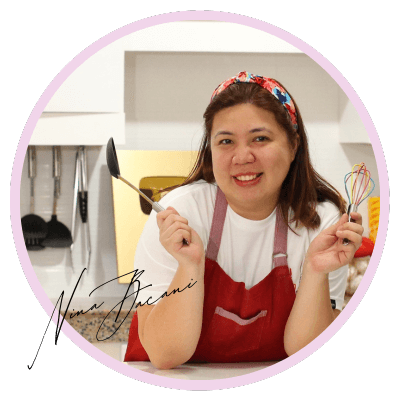
YOUR MENTOR
Nina Bacani is a recipe content creator, food entrepreneur, and mentor to Filipino foodpreneurs.
She has built food products and worked with hundreds of resellers nationwide. She graduated from International Culinary and Pastry Arts and founded the Foodpreneur Workshop in 2021.
Her teaching style is practical, conversational, and beginner-friendly—using Taglish explanations, food-product examples, and reusable tools that participants can apply after the class.
WHY COSTING CLARITY MATTERS
That does not mean every participant is losing that amount. Your actual number depends on your product, order volume, recipe, labor, packaging, and other expenses.
The goal is not to promise a specific profit. The goal is to give you a clearer and more repeatable way to review the prices you set.
IS THIS FOR YOU?
Beginner ka man or matagal ka nang nagbebenta, the class can help when your current pricing is based on hula, competitor checking, or “feeling ko okay na.”
LET’S ADDRESS THE REAL QUESTIONS
Practical food-product examples, step-by-step explanations, and worksheets ang gamit. Hindi mo kailangan ng advanced accounting knowledge.
The class explains what belongs in each number, how yield changes cost per unit, and how to review markup, break-even, and promos—not just where to type.
Lifetime replay is included through the private Facebook group, although attending live helps you follow the sequence while the lesson is fresh.
Hindi automatic na tataas ang price. The goal is to understand your basis and identify what may need to change.
HOW ENROLLMENT WORKS
Submit your full name, email address, and mobile number.
Payment details will appear after successful registration.
Complete the payment and upload a clear JPG, PNG, or PDF receipt.
After your proof is reviewed, the team will send your enrollment confirmation, Zoom information, and Facebook group or replay instructions.
Submitting the first form does not confirm your seat. Your seat is confirmed only after payment and proof verification. New registrations close Friday, October 23, 2026 at 11:59 PM Philippine Time; a valid pre-close proof credential remains usable for 14 days.
REGISTRATION FIRST
Enter your details below. Payment payment instructions will appear after registration.
BEFORE YOU ENROLL
The live class is on Saturday, October 24, 2026, from 9:00 AM–4:00 PM Philippine Time via Zoom.
The current Batch 10 enrollment rate is ₱1,497. It changes only on the published Philippine Time schedule.
New registrations close on Friday, October 23, 2026 at 11:59 PM Philippine Time. After a successful pre-close registration, the signed proof credential remains valid for 14 days from registration and can still be used after enrollment closes while that window has not expired.
The team needs time to match registrations and payment proofs, confirm participants, and send Zoom and Facebook group instructions before the live session.
Yes. It can be especially useful before launch because you can review your cost and pricing basis before accepting orders.
Yes. It is designed for existing sellers who want to review missing costs, batch yield, cost per unit, selling price, break-even, or promo decisions.
Yes. The lessons use practical food-product examples, step-by-step explanations, and worksheets. You do not need advanced accounting knowledge.
No. This is a practical food-costing and pricing masterclass. It does not replace professional accounting, tax, legal, or bookkeeping advice.
No. The focus is costing, pricing, break-even, and promotional decisions—not teaching new recipes.
Prepare one recipe or product, ingredient prices, packaging cost, current selling price, batch yield, and any labor or overhead information you already know. You can still attend if some information is incomplete.
The live masterclass will happen on Zoom. Access details will be sent after your payment is verified and your enrollment is confirmed.
A laptop or desktop is recommended if you want to follow the spreadsheet comfortably. You can still watch on a phone, but editing a worksheet may be easier on a larger screen.
Lifetime replay is included via the private Facebook group. You will need an active Facebook account to access it unless the team announces another delivery method.
The calculator, worksheets, and access instructions will be shared after your enrollment and payment are confirmed.
Yes. The tools are intended to be reusable for your products, subject to the personal-use terms provided with the files.
The class helps you compute and review a pricing basis using your own costs and business information. Your final price still depends on market, quality, positioning, serving, demand, and business strategy.
It can help you understand whether your current price still has a reasonable basis and how to communicate a price review more clearly. It does not guarantee that every customer will accept a higher price.
Submit the registration form first. Payment details appear after successful registration. Pay the ₱1,497 rate shown on your registration receipt, then upload your proof on the page.
No. Your seat is confirmed only after your payment proof has been reviewed and matched to your registration.
Review the published Food Costing Masterclass Refund Policy before paying. Transfer and refund requests are reviewed under that policy.
ENROLLMENT CLOSES BEFORE CLASS DAY
Enrollment closes before the live session so the team has enough time to match your registration and payment, review your receipt, and send Zoom and Facebook group instructions.
The current ₱1,497 rate changes on the published schedule. New registration closes at the cutoff.
ENROLL — ₱1,497FOOD COSTING MASTERCLASS BATCH 10
Join Nina Bacani and learn a practical process you can reuse for existing products, new products, supplier-price changes, price reviews, and promotions.